React Hooks原理
背景介绍
如果没有Hooks,在函数式组件中,只能接受Props、渲染UI、触发事件等。状态无法保存、逻辑也无法复用。所以Hooks的作用就是复用逻辑和保存状态。
流程
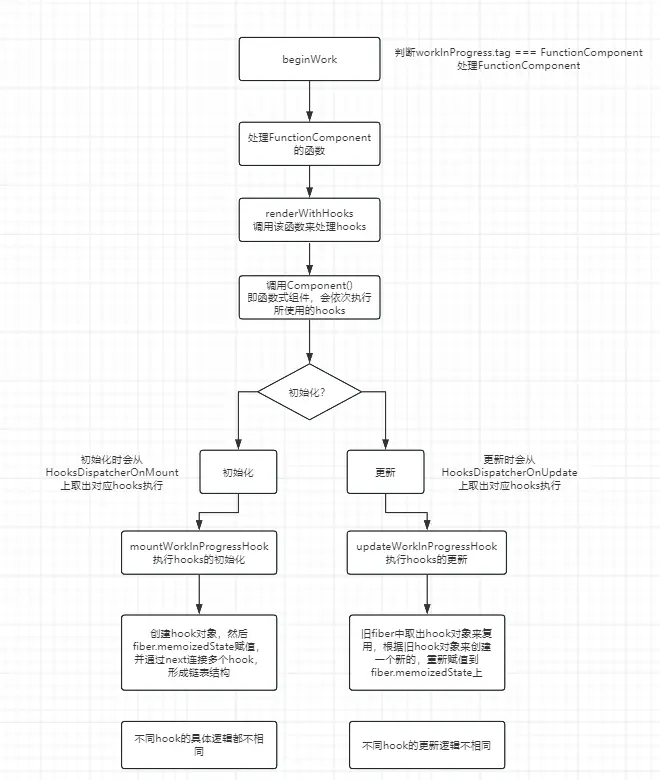
在beginWork中,遇到FunctionComponent会触发updateFunctionComponent函数,在该函数内执行renderWithHooks,是处理Hooks的入口。
// react-reconciler/src/ReactFiberHooks.js
function renderWithHooks(
	current: Fiber | null,
  workInProgress: Fiber,
  Component: (p: Props, arg: SecondArg) => any,
  props: Props,
  secondArg: SecondArg,
  nextRenderLanes: Lanes,
) {
  // workInProgress是当前正在reconciler的fiber节点,将这个节点放到currentlyRenderingFiber全局变量里面
  currentlyRenderingFiber = workInProgress;

  // 省略dev环境的处理

  // 存hooks链表
  workInProgress.memoizedState = null;
  // 存放effect list 在commit阶段遍历这个
  workInProgress.updateQueue = null;
  workInProgress.lanes = NoLanes;

  // 判断是初始化还是更新,选择不同的Hooks对象 HooksDispatcherOnMount HooksDispatcherOnUpdate
    ReactCurrentDispatcher.current =
      current === null || current.memoizedState === null
        ? HooksDispatcherOnMount
        : HooksDispatcherOnUpdate;

  // 执行Function Component,即我们写的函数组件。就会依次执行hooks
  let children = Component(props, secondArg);

  // 结束之后的一些处理
  finishRenderingHooks(current, workInProgress, Component);
}可以看到,根据阶段的不同选择不同的Hooks对象:
- 初始化
HooksDispatcherOnMount - 更新
HooksDispatcherOnUpdate
初始化
在初始化时将ReactCurrentDispatcher.current全局变量赋值为HooksDispatcherOnMount对象。
在执行Component时会依次执行hooks时,会从ReactCurrentDispatcher.current中取出对应的hook来执行。
// HooksDispatcherOnMount
const HooksDispatcherOnMount: Dispatcher = {
  useEffect: mountEffect,
  useMemo: mountMemo,
  useRef: mountRef,
  useState: mountState,
  // ...
};比如执行useStatehook,就会从这个对象上找到mountState来执行。
hook的初始化逻辑如下:
// react-reconciler/src/ReactFiberHooks.js
function mountWorkInProgressHook(): Hook {
  // Hook的结构
  const hook: Hook = {
    /*存hook的信息*/
    memoizedState: null,

    baseState: null,
    baseQueue: null,
    queue: null,

    /** 通过next形成链表结构 */
    next: null,
  };

  if (workInProgressHook === null) {
    // 之前没有hook 现在要新建一个hook
    // currentlyRenderingFiber是当前的fiber节点, 将hook挂载到fiber的memoizedState上
    // This is the first hook in the list
    currentlyRenderingFiber.memoizedState = workInProgressHook = hook;
  } else {
    // 有多个hook 通过next指针来连接
    // Append to the end of the list
    workInProgressHook = workInProgressHook.next = hook;
  }
  return workInProgressHook;
}- 将hooks信息存到
fiber.memoizedState上,通过next形成单向链表 - 通过
hook.memoizedState来存储不同hook需要的信息,比如useRef,存的就是{current: initialState}
更新
函数式组件重渲染的时候,会将ReactCurrentDispatcher.current赋值为HooksDispatcherOnUpdate,和初始化一样的逻辑,会从该对象上取出对应的hook来执行。
复用逻辑如下:
function updateWorkInProgressHook(): Hook {
  let nextCurrentHook: null | Hook;
  if (currentHook === null) {
    // alternate指向currentFiber中的节点 即旧的fiber节点
    const current = currentlyRenderingFiber.alternate;
    if (current !== null) {
      // hooks链表第一个 复用旧的
      nextCurrentHook = current.memoizedState;
    } else {
      nextCurrentHook = null;
    }
  } else {
    // hooks链表非一个 直接通过next遍历旧的
    nextCurrentHook = currentHook.next;
  }

  // 这个变量是当前fiber上的hook
  let nextWorkInProgressHook: null | Hook;
  if (workInProgressHook === null) {
    nextWorkInProgressHook = currentlyRenderingFiber.memoizedState;
  } else {
    nextWorkInProgressHook = workInProgressHook.next;
  }

  if (nextWorkInProgressHook !== null) {
    workInProgressHook = nextWorkInProgressHook;
    nextWorkInProgressHook = workInProgressHook.next;

    currentHook = nextCurrentHook;
  } else {
    // Clone from the current hook.

    currentHook = nextCurrentHook;

    const newHook: Hook = {
      memoizedState: currentHook.memoizedState,

      baseState: currentHook.baseState,
      baseQueue: currentHook.baseQueue,
      queue: currentHook.queue,

      next: null,
    };

    if (workInProgressHook === null) {
      // This is the first hook in the list.
      currentlyRenderingFiber.memoizedState = workInProgressHook = newHook;
    } else {
      // Append to the end of the list.
      workInProgressHook = workInProgressHook.next = newHook;
    }
  }
  return workInProgressHook;
}可以看到每次重新渲染时,会从旧的fiber节点中取出对应的hooks信息fiber.memoizedState来复用,复用逻辑和初始化时是一样的。
hook之所以不能写在判断语句中,因为每次重渲染都会从上一次fiber中取出hooks信息(
fiber.memoizedState),每次重渲染条件不会完全相同,在dev环境下,会判断两次渲染的hooks名称是否能对应,对应不上就会报错。源码中存有一个上一次hooks的名称数组
hookTypesDev,以及当前执行的hook名称currentHookNameInDev以及idx索引HookTypesUpdateIndexDev,hookTypesDev[hookTypesUpdateIndexDev] !== currentHookNameInDev不相等就报错
具体hooks的初始化\更新逻辑会根据hooks类型进行区分处理
状态派发
通过useState\useReducer来实现函数式组件的状态
初始化
会从HooksDispatcherOnMount中取出对应的hook执行:
function mountState(
  initialState,
) {
  const hook = mountStateImpl(initialState);
  const queue = hook.queue;
  const dispatch = (dispatchSetState.bind(
    null,
    currentlyRenderingFiber,
    queue,
  ));
  queue.dispatch = dispatch;
  return [hook.memoizedState, dispatch];
}mountStateImpl的逻辑:
function mountStateImpl(initialState) {
  const hook = mountWorkInProgressHook();
  if (typeof initialState === 'function') {
    // 兼容useState(() => data)的写法
  }
  hook.memoizedState = hook.baseState = initialState;
  const queue = {
    pending: null,
    lanes: NoLanes,
    dispatch: null,
    lastRenderedReducer: basicStateReducer,
    lastRenderedState: (initialState),
  };
  hook.queue = queue;
  return hook;
}
执行了
mountWorkInProgressHook,在该函数中执行了hooks的初始化。然后更新hook对象
hook.memoizedState赋值为传入的initialState- 创建一个queue对象,挂载到
hook.queue上。该属性是用来批处理的
mountStateImpl执行完成之后,hook对象就算是初始化完成了。
然后通过dispatchSetState.bind分发出一个dispatch更新函数,并且传入了fiber,这样就可以知道更新的fiber节点在哪里。
然后执行dispatch更新函数时:
function dispatchSetState(fiber, queue, action) {
  const update: {
    lane, action, next: null, // ...其他一些属性
  }
  if(isRenderPhaseUpdate(fiber)){
    // 判断当前fiber处于渲染更新阶段 说明已经在更新了 那么不需要更新
    const pending = queue.pending
    if(queue.pending === null) {
      update.next = update
    }else {
      update.next = pending.next
      pending.next = update
    }
    queue.pending = update
  }else {
    // 不在渲染更新阶段
    // ...
    // 当前不在更新阶段,所以渲染更新
    scheduleUpdateOnFiber()
  }
}渲染更新阶段jsxexport default () => { const [count, setCount] = useState(1) const add = () => { setCount(d => d + 1) } }非渲染更新阶段jsxexport default () => { const [count, setCount] = useState(1) const add = () => { setTimeout(() => { setCount(d => d + 1) }, 100) } }
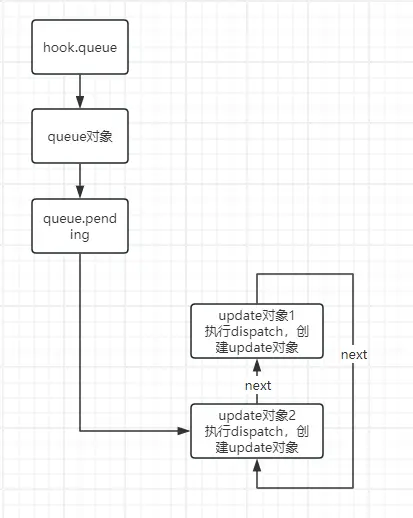
渲染更新阶段执行了dispath,会形成一个环状链表
export default () => {
  const [count, setCount] = useState(1)
  setCount(d => d + 1)
  setCount(d => d + 1)
}
非渲染更新阶段执行了dispath,做了以下事情:
- 判断当前state和上一次render时的state是否相等(浅比较)
- 不相等 执行
scheduleUpdateOnFiber执行更新
最后将更新函数dispatch放到queue.dispatch上。
更新
函数组件重新渲染时,会从HooksDispatcherOnUpdate上取出对应hook来执行,如updateState,会进入updateWorkInProgressHook函数,处理hook,然后调用updateReducerImpl。更新时useState、useReducer逻辑是一样的:
function updateReducerImpl(hook, current, reducer) {
  const queue = hook.queue

  const dispatch = queue.dispatch
  return [hook.memoizedState, dispatch]
}如果hook.queue.pending有值的话,更新流程如下:
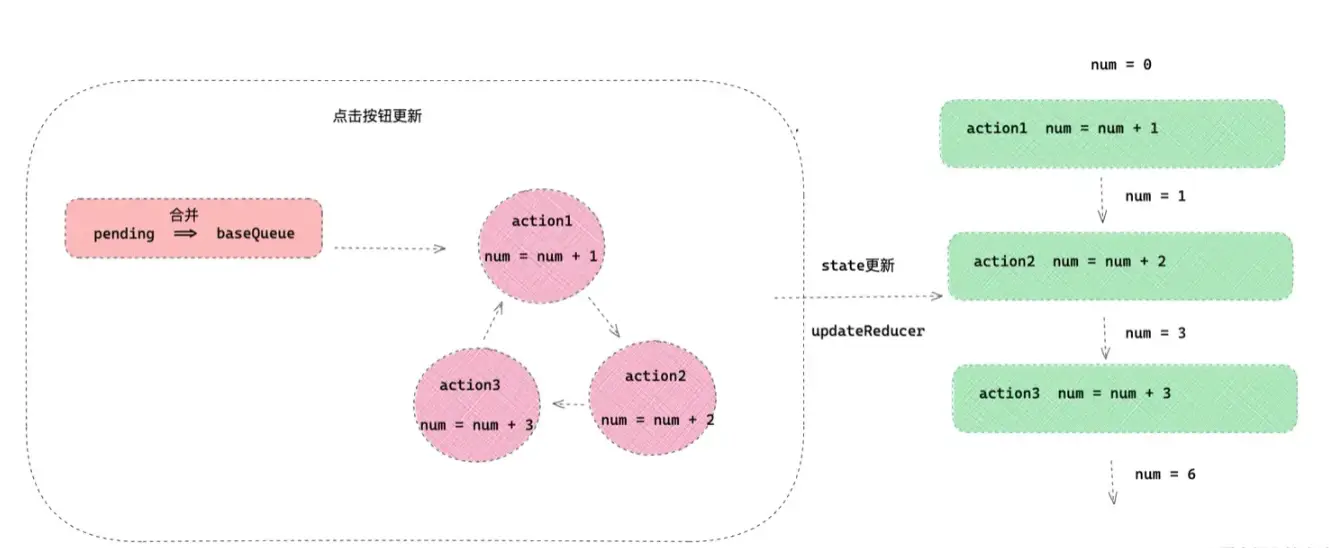
- 把待更新的
pending合并到baseQueue,然后循环更新。
useEffect 副作用
在render阶段,并没有操作DOM元素,而是将这些操作转成effectTag,等到commit阶段再同意处理这些副作用,这里的副作用包括useEffect\useLayoutEffect。
初始化
function mountEffect() {
  const hook = mountWorkInProgressHook()
  const nextDeps = deps === undefined ? null : deps
  hook.memoizedState = pushEffect(
    HookHasEffect | hookFlags,
    create,
    createEffectInstance(),
    nextDeps,
  );
}- 通过
mountWorkInProgressHook拿到hook - 通过
pushEffect创建一个effect,并保存到hook.memoizedState上- 在
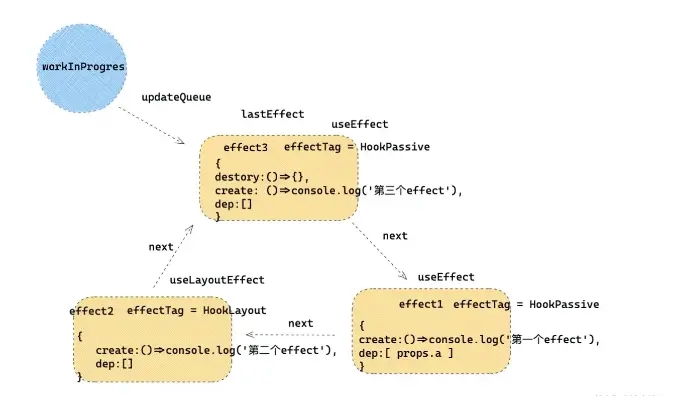
pushEffect中创建了effect对象,而且如果有多个effect 还会形成链表,挂到fiber.updateQueue上
- 在
// effect对象结构
const effect = {
  tag, create, deps, next
}- tag就是副作用的tag
- create是函数
- deps是依赖
- next是指针,形成链表
如果有以下代码:
React.useEffect(()=>{
    console.log('第一个effect')
},[ props.a ])
React.useLayoutEffect(()=>{
    console.log('第二个effect')
},[])
React.useEffect(()=>{
    console.log('第三个effect')
    return () => {}
},[])
更新
更新的核心逻辑就是判断deps有没有变化,如果没有变化,更新副作用链表。如果变化了,在更新副作用链表的同时,还会添加副作用tagcurrentlyRenderingFiber.effectTag = fiberEffectTag。
在commit阶段根据这effectTag来执行副作用。
effectTag
React中会使用不同的EffectTag来标记副作用,useEffect UpdateEffect|PassiveEffect,useLayoutEffect HookLayout。
然后在commit阶段根据不同的标识符来处理useEffect\useLayoutEffect的副作用。
useRef 状态获取
这就比较简单了,首先初始化时:
function mountRef() {
  const ref = { current: initialValue }
  hook.memoized = ref
  return ref
}
然后在更新时:
function updateRef() {
  const hook = updateWorkInProgressHook()
  return hook.memoizedState
}就是将ref数据挂到hook.memoizedState上,更新的时候返回最新的就可以。
useMemo 缓存数据
初始化时:
function mountMemo(nextCreate,deps) {
  const hook = mountWorkInProgressHook()
  const nextDeps = deps === undefined ? null : deps
  const nextValue = nextCreate()
  hook.memoziedState = [nextValue, nextDeps]
  return nextValue
}
在组件更新时:
function updateMemo(nextCreate,deps) {
  const hook = updateWorkInProgressHook()
  const nextDeps = deps === undefined ? null : deps
  const prevState = hook.memoizedState
  if(nextDeps !== null) {
    const prevDeps = prevState[1]
    if(areHookInputsEqual(nextDeps, prevDeps)) {
      return prevState[0]
    }
  }
  const nextValue = nextCreate()
  hook.memoziedState = [nextValue, nextDeps]
  return nextValue
}可以看到在组件更新时,会判断依赖是否发生了变化,没有变化直接返回上一次的缓存值。如果没有依赖或者是依赖变化了,会重新执行useMemo接受的函数生成一个新的值返回出去。
总结
reactHooks的核心原理就是闭包,将需要的信息放到fiber.memoizedState上保存,每次组件重新渲染,都会从旧的fiber节点中取出上一次的hooks信息重新创建。不同的hook实现的原理不同。
比较简单的useRef\useMemo等,就是闭包处理,初始化时创建对象,重渲染时取出对象。
比较复杂的useState\useEffect等,重渲染时除了需要拿到最新值,还需要处理一些其他的事情,比如effect副作用的处理。